
Dismantling God

Most of us grew up with a very specific idea of God, even if we were never taught to question where that idea came from. It was usually presented as the truth, not a version.
Something already decided. Something we were expected to accept rather than examine.
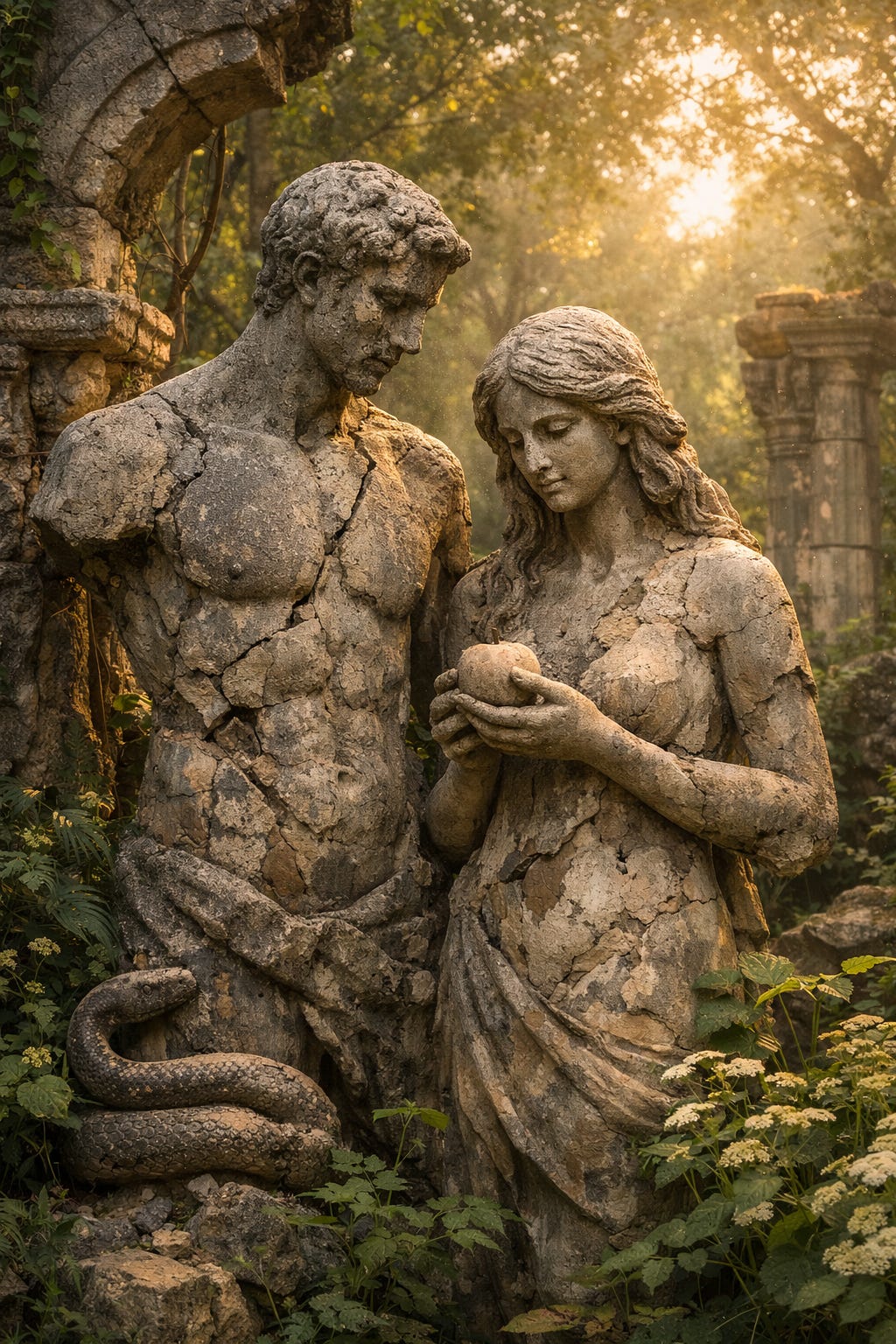
But the way humans understand God has always been shaped by culture, power, and time.
The God many of us inherited through Western Christianity is one particular model. It imagines God as external and separate from humanity. A higher being who watches from above, judges from a distance, and requires obedience in order to love. Relationship with this God is framed around approval, reconciliation, and submission.
Love, in this system, comes with conditions. Belonging is not automatic. Acceptance must be earned.
That framework didn’t appear out of nowhere. It formed in patriarchal societies and under empires where hierarchy was necessary to maintain order. Authority flowed downward. Power needed justification. Control needed moral backing. Not surprisingly, God came to reflect those same structures.
Such as God is male. God grants authority unevenly. God anoints men to rule and lead.
Women, meanwhile, are rarely just people in these stories. They become symbols. Warnings. Sources of temptation or downfall. Their bodies, choices, and influence are treated as problems that need managing. Even reproduction is framed in a way that suggests women are insufficient on their own, requiring divine intervention to fulfill sacred purpose.
At the same time, humanity itself is described as fundamentally flawed.
The story begins with two humans placed in a situation they don’t fully understand, punished for curiosity, and blamed for a world of suffering that follows. That narrative becomes the foundation for shame, fear, and the belief that humans can’t be trusted without external authority.
From there, the solution offered isn’t healing. It’s sacrifice.
The world is described as fallen, and the fix requires blood. Violence becomes holy. Love is proven only through suffering. Salvation is postponed to a future moment, often tied to judgment, destruction, and the end of the world.
This God doesn’t simply invite trust. He demands belief in specific doctrines, even when those doctrines defy reason, intuition, or lived experience. Faith becomes equated with not questioning. Doubt becomes moral failure.
And the consequences are made extreme.
Eternal punishment is introduced as a threat for believing the wrong things, asking the wrong questions, or being born into the wrong place at the wrong time. Fear isn’t an accident in this system. It’s part of how it works.
Over time, God becomes less about mystery and more about enforcement. Less about connection and more about control.
For many people, this is where the unraveling starts.
Not because they want to abandon meaning or spirituality, but because the logic stops holding together. Love that relies on threats no longer feels like love. A divine source that needs fear to maintain loyalty begins to feel less sacred and more constructed. A God who orchestrates suffering and then demands gratitude for rescue becomes hard to reconcile.
At that point, what’s being questioned isn’t the existence of the sacred. It’s this particular version of God.
Dismantling God, in this sense, isn’t about rejecting spirituality or embracing nihilism. It’s recognizing that this God is a human-made model. A framework shaped by culture, power, and fear, then passed down as unquestionable truth.
And what humans create, humans can also dismantle.
Letting go of this God doesn’t erase meaning. It often opens space for something quieter and more grounded. The sacred no longer has to exist as an external authority figure. It can be understood as present rather than distant. As connection rather than command. As depth rather than threat.
This also explains why dismantling God can feel unsettling. A God built on hierarchy and fear supports systems that rely on those same dynamics. Questioning the God destabilizes the structure. It removes the divine stamp that keeps certain forms of control in place.
But we have a choice. We are not required to keep believing in a God that harms our humanity simply because we were taught his name early. The religious version of God is only one way humans have tried to explain the sacred, not the final word on it.
Dismantling God isn’t destruction. It’s discernment. It’s the decision to stop confusing fear with faith, and to allow meaning to exist without needing permission. It’s time to be free of it.
If you search for divine wisdom earnestly you will find it. Whatever you think of Jesus and the Christian God, start by looking at the ministry of Jesus. Before you analyze further, consider if the words of Jesus feel divinely inspired. Notice the literal, the figurative, the metaphorical, and how it applies to multiple layers of all moments.
Then consider how well you think you understand reality and God.
Wonderfully articulated ✨